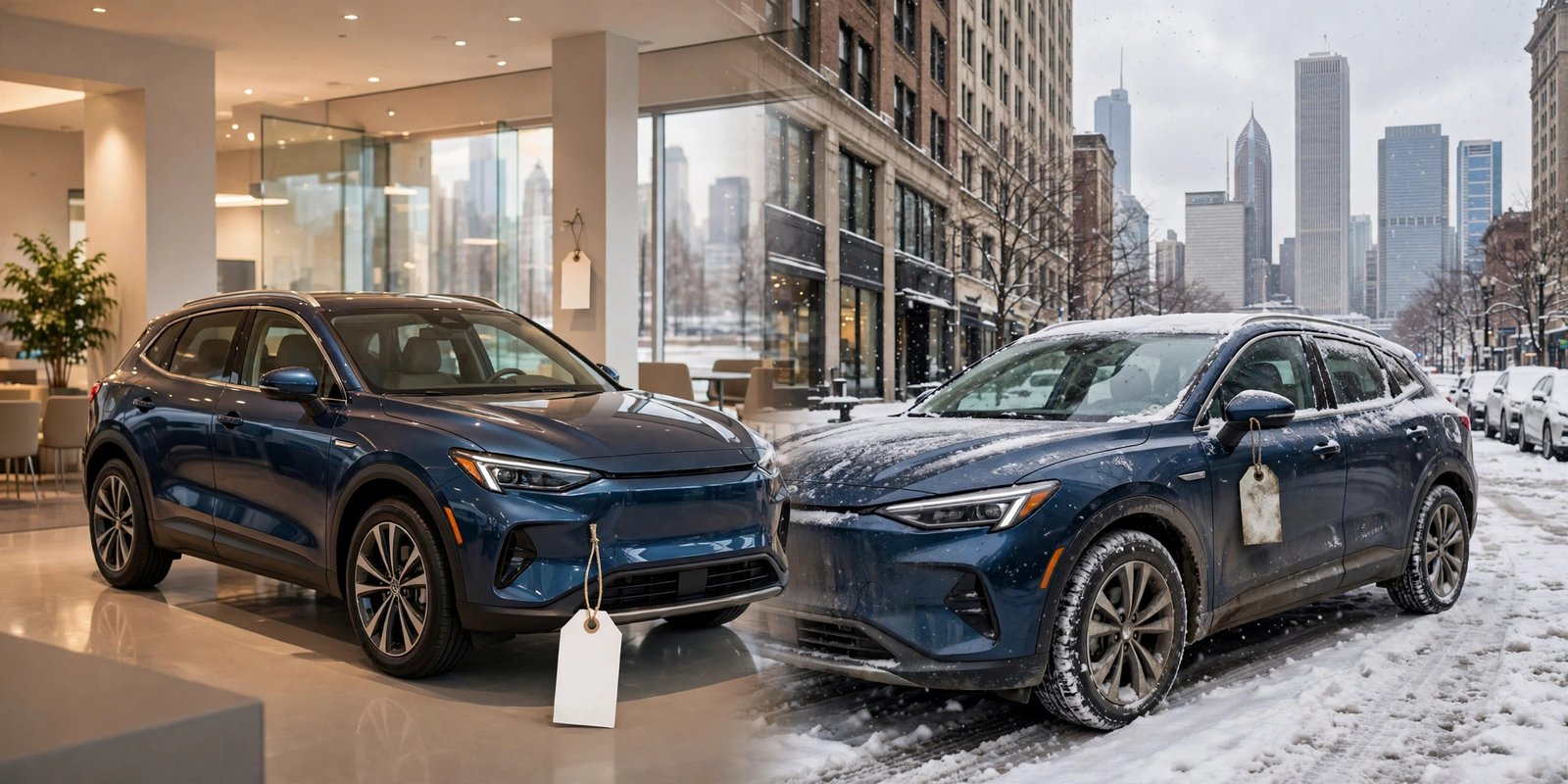
The personal finance internet has a settled verdict: buying a new car is financial suicide. “Drive a 10-year-old Camry,” they chant, “let someone else eat the depreciation.” And they’re mostly right — a new car loses 20–30% of its value in the first three years, making it one of the worst “investments” normal people make. But “mostly right” isn’t “always right.” There are specific situations where buying new is the smart financial move — and Chicago’s winters, salt, and potholes create more of them than the internet admits.
This guide gives you the honest math on new versus used, the scenarios where new actually wins, and how to buy new without getting fleeced if it’s the right call.
The Depreciation Reality (Why Used Usually Wins)
The numbers are brutal and undisputed: new cars lose ~20% in year one and ~15% annually for the next few years. A $38,000 new SUV is worth roughly $24,000 after three years — $14,000 evaporated, or about $390/month just in depreciation. A 3-year-old version of the same SUV costs $24,000, depreciates far more slowly (~8–10%/year), and delivers 90% of the utility. Over a decade, the used buyer typically saves $10,000–$20,000 in depreciation alone — before accounting for lower insurance (cheaper car = cheaper premiums) and lower registration costs.
The used advantage compounds in Chicago specifically: the city’s salt-heavy winters and legendary potholes punish cars regardless of age — a new car’s pristine condition has a short half-life on Lower Wacker Drive. Paying the new-car premium for perfection that Chicago’s roads erase in 18 months is questionable economics. For most buyers, a 2–4 year old car with a clean history is the financial sweet spot: modern safety tech, most depreciation absorbed, plenty of life left.
When Buying New Actually Makes Sense
Exception one: you keep cars 10+ years. Depreciation only matters if you sell — drive a new car for 12 years and the per-year cost drops below most used strategies, plus you get the full warranty period and known maintenance history. The “drive it into the ground” buyer is the one case where new-car math works cleanly.
Exception two: the used market is distorted. Post-2020, used-car prices went haywire — at times, 2-year-old cars cost nearly what new ones did. When the new-vs-lightly-used gap shrinks below ~15%, new wins on warranty, financing rates (new-car loans often carry lower APRs), and the absence of unknown history. Always price both; the “used always wins” rule assumes normal markets.
Exception three: specific needs new serves better. Chicago winter warriors who need the latest AWD/traction systems and safety tech (automatic emergency braking, blind-spot monitoring — genuinely life-saving features that older used cars lack), buyers who need a specific configuration for work (contractors, large families), and EV buyers capturing the $7,500 federal tax credit (which applies to new EVs meeting requirements — often erasing the new premium entirely). Exception four: you can genuinely afford it — the purchase is under 15% of gross income, paid in cash or short-term financing, without touching emergency savings. If it doesn’t strain anything, the “mistake” is a luxury you can afford — just own it as lifestyle spending, not investment.
The Real Cost Comparison: Chicago Edition
Run total cost of ownership, not sticker price, over your planned ownership period. New $38,000 SUV, 10-year ownership: depreciation ~$28,000, insurance higher (~$1,800/year vs $1,200), but warranty covers years 1–3/5 and maintenance is predictable. Total 10-year cost: roughly $55,000–$60,000 all-in. Three-year-old same SUV at $24,000, 10-year ownership (car is 13 at the end): depreciation ~$18,000, lower insurance, but maintenance climbs in years 8–13 (budget $1,500–$2,500/year for an aging Chicago car). Total: roughly $42,000–$48,000. The used buyer saves $10,000+ — real money, but not the 2x difference sticker prices suggest, because old cars cost more to maintain.
Factor Chicago specifics: city sticker ($140+/year), parking costs (which dwarf car costs for many downtown residents — sometimes the smartest car move in Chicago is no car, with the CTA and Metra), winter tire sets ($800–$1,200, needed regardless of new/used), and salt-related undercarriage maintenance. Our 50/30/20 budgeting guide keeps transport in the needs slice — and if the car payment pushes needs over 50%, the car is too expensive regardless of new or used.
How to Buy New Without Getting Fleeced
If new is your call, buy smart. Get pre-approved financing from your bank or credit union before visiting dealers — dealer financing is a profit center, not a service. The CFPB’s auto loan toolkit walks through rates, terms, and the dealer-markup traps to watch for. Price via email with multiple Chicago-area dealers (the competition between suburban dealerships is your leverage — make them bid). Buy at month or quarter end, when salespeople chase quotas. Decline the upsells: extended warranties (overpriced, negotiable if you truly want one — buy from the manufacturer later, not the finance office), paint protection, VIN etching, nitrogen tires — all high-margin dealer profit.
Negotiate the out-the-door price, not the monthly payment — payment-focused negotiation hides inflated prices in extended terms. And consider ordering rather than buying off the lot if you’re not in a hurry — you’ll get exactly the trim you want without paying for option packages you don’t. The repair-vs-replace calculus applies to cars too — our piece on whether to fix or replace a cracked laptop screen uses the same framework: compare repair costs against replacement value, not against zero.
Conclusion
Is buying a new car ever a smart financial move? Yes — when you’ll drive it 10+ years, when used prices are distorted, when you need the latest safety tech or capture EV credits, or when you can truly afford it as lifestyle spending. For everyone else, the 2–4 year old used car remains the rational champion. The real enemy isn’t new or used — it’s buying more car than your life requires, financed over 84 months, because the payment “seemed affordable.” Run the total ownership math, respect the budget slice, and buy the car your actual life needs. Chicago’s potholes don’t care what you paid — but your net worth does.
Frequently Asked Questions
Is buying a new car ever a smart financial move?
Yes, in specific cases: keeping it 10+ years, distorted used markets, needing latest safety tech, capturing EV tax credits, or genuine affordability. For most buyers, 2–4 year old used cars win on total cost.
How much does a new car depreciate?
Roughly 20% in year one and 15% annually for the next few years — a $38,000 car is worth ~$24,000 after three years. Depreciation slows dramatically after year 4–5.
New vs. used car: which is cheaper over 10 years?
Usually used by $10,000+, but less than sticker prices suggest — aging cars cost more to maintain and insure differently. Run total cost of ownership (depreciation + insurance + maintenance + financing) for your specific situation — fueleconomy.gov’s cost calculators make the fuel-and-ownership math concrete, especially when comparing gas, hybrid, and EV options.
Should Chicagoans buy new cars for winter?
Not necessarily — a 3-year-old AWD vehicle with winter tires handles Chicago winters as well as a new one. Buy new for winter only if you specifically need the latest traction/safety tech or the used AWD market is overpriced.
How do I avoid overpaying at a dealership?
Get pre-approved financing first, solicit email bids from multiple dealers, negotiate out-the-door price (not monthly payments), buy at month/quarter end, and decline all finance-office upsells.