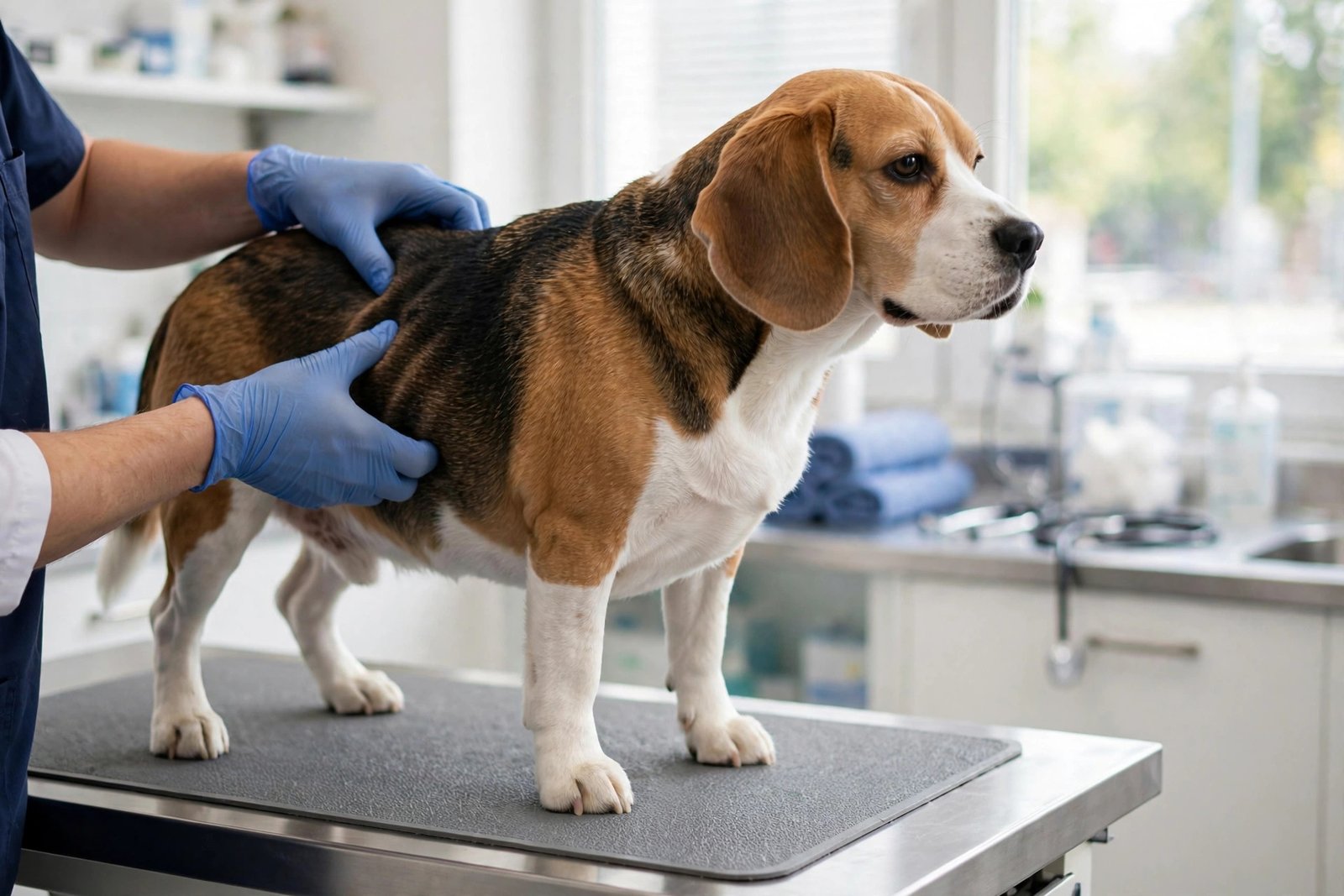
You’re looking at your cat from above and realizing you can’t quite see a waist anymore. Or your Lab’s belly hangs a little lower than it did last summer. Pet obesity is the most common nutritional disease in American companion animals — the Association for Pet Obesity Prevention has consistently found that over half of US dogs and cats are overweight or obese. And it’s not just cosmetic: those extra pounds are actively shortening your pet’s life. Here’s how to assess honestly and fix it without a miserable crash diet.
The Rib Test: Assessing in 60 Seconds
Forget the scale for a moment — body condition scoring is the vet’s real tool, and you can learn it in a minute. For dogs and cats alike, the ideal is a Body Condition Score of 4–5 on the 9-point scale.
The rib check: run your hands along your pet’s ribcage with light pressure. You should feel ribs easily under a thin fat layer, like the back of your hand. If you have to press hard to find them, that’s excess fat. If they’re visible without pressing (in most breeds — sighthounds excepted), that’s underweight.
The waist check: look from above. There should be a visible tuck behind the ribs — an hourglass hint. From the side, the belly should tuck up behind the ribcage, not hang level or sag. No waist from above plus no tuck from the side equals overweight, regardless of what the scale says.
Breed illusions trip owners up constantly. A fluffy Chow or Persian can hide 20% extra weight in coat — you must feel, not look. And many owners of Labradors, Beagles, and Pugs have simply normalized the breed’s obesity: “he’s just a chunky Lab” is the most dangerous sentence in pet nutrition. The AVMA’s pet owner resources include body condition charts worth printing and sticking on the fridge.
Why It Matters: The Real Health Costs
This isn’t about aesthetics. The landmark Purina lifespan study found that dogs kept lean lived an average of 1.8 years longer than their overweight littermates — nearly two extra years, with delayed onset of chronic disease. Overweight pets face dramatically higher risks of arthritis (every extra pound multiplies joint load), diabetes (especially cats), respiratory compromise, liver disease, surgical complications, and heat intolerance — a serious issue for Chicago’s brachycephalic dogs in humid summers.
Fat isn’t inert, either. Adipose tissue is hormonally active, producing inflammatory cytokines that drive systemic inflammation. An overweight pet is a chronically inflamed pet. Weight loss isn’t vanity; it’s the single highest-impact health intervention available for most overweight animals — more impactful than any supplement.
The Weight-Loss Plan That Actually Works
Crash diets fail in pets just like in humans — and in cats, rapid weight loss can trigger hepatic lipidosis (fatty liver disease), which is life-threatening. The safe rate: 1–2% of body weight per week for dogs, 0.5–2% for cats. Slow and steady.
Step 1: Know What You’re Feeding
Measure. Most owners free-feed or “eyeball” portions, and studies show eyeballing overestimates by 20–50%. Get a measuring cup or kitchen scale, read the bag’s feeding guide, and — critically — count treats. Treats should be under 10% of daily calories, and those “small” training treats add up terrifyingly fast. Table scraps are the silent killer of waistlines; a single slice of cheese to a 10-pound cat is proportionally like a human eating several hamburgers.
Step 2: Calculate the Target, Not the Current
Feed for the ideal weight, not the current weight. Your vet can calculate resting energy requirements, but the practical approach: reduce current intake by 15–20%, weigh every two weeks, and adjust. If no loss in a month, cut another 10%. Prescription weight-loss diets exist for a reason — they’re formulated to keep pets full on fewer calories with proper nutrients, as VCA’s pet nutrition resources explain. For cats especially, don’t just feed less of a regular food long-term without vet guidance; nutrient deficiencies are real.
Step 3: Move More (Realistically)
Exercise supports weight loss but diet drives it — you can’t out-walk a full food bowl. Still, activity matters for metabolism and muscle. For dogs: build up daily walking routines gradually (an obese dog thrown into 5-mile hikes gets injured, not fit), add fetch and swimming. For cats: two 10-minute interactive play sessions daily, food puzzles instead of bowls (a cat that “hunts” kibble from a puzzle feeder eats slower and moves more), and vertical space that encourages climbing.
Step 4: Fix the Human
The hardest step. Begging works because it has always worked — those eyes are evolutionary weapons. Get the whole household on the plan: one person sneaking treats undermines everything. Replace food rewards with play, petting, or tiny low-calorie treats (single blueberries for dogs, freeze-dried protein bits). And address your own guilt: withholding excess food isn’t deprivation, it’s healthcare. Enrichment beyond food — games, training, outings — fills the emotional gap that treats were filling.
When It’s Not Just Overfeeding
If weight gain is rapid, or weight won’t budge despite a genuine calorie deficit, see the vet. Hypothyroidism (dogs — sluggish, weight gain, skin changes), Cushing’s disease, and certain medications cause weight gain independent of diet. Neutering also drops metabolic rate ~20% — the post-spay/neuter weight creep is so predictable it should be planned for, not discovered. Senior pets gain as activity drops; adjust food down proactively at age 7+, don’t wait for the waist to vanish.
Conclusion
Pet obesity is an epidemic of love — we express affection through food, and our animals pay with years of life. The fix is unglamorous but proven: honest body condition assessment (feel the ribs, find the waist), measured portions fed for ideal weight, treats under 10%, gradual exercise, whole-household consistency, and a vet check for medical causes. Aim for 1–2% loss per week, weigh every two weeks without fail, and remember the Purina number: lean dogs lived nearly two years longer. That’s not a diet. That’s a genuine gift of extra healthy years together.
Frequently Asked Questions
How can I tell if my pet is overweight?
Feel the ribs (should be easy to feel under a thin fat layer), look for a waist from above and a belly tuck from the side. Vets use a 9-point body condition score — 4–5 is ideal. When in doubt, ask your vet to score your pet at the next visit.
How fast should my pet lose weight?
1–2% of body weight per week for dogs, 0.5–2% for cats. Faster loss risks hepatic lipidosis (fatty liver) in cats, which can be fatal. Weigh every two weeks and adjust food by 10% increments.
Are prescription weight-loss pet foods worth it?
Yes, for significantly overweight pets — they’re formulated to deliver complete nutrition at reduced calories while keeping pets satiated, which is hard to achieve by just feeding less regular food. Your vet can recommend one matched to your pet’s needs.
Why is my pet gaining weight despite eating the same amount?
Metabolism drops with age and neutering (~20% after spay/neuter), activity often declines silently, and medical causes like hypothyroidism or Cushing’s disease cause weight gain independent of diet. If intake is truly controlled and weight still climbs, get a vet workup.