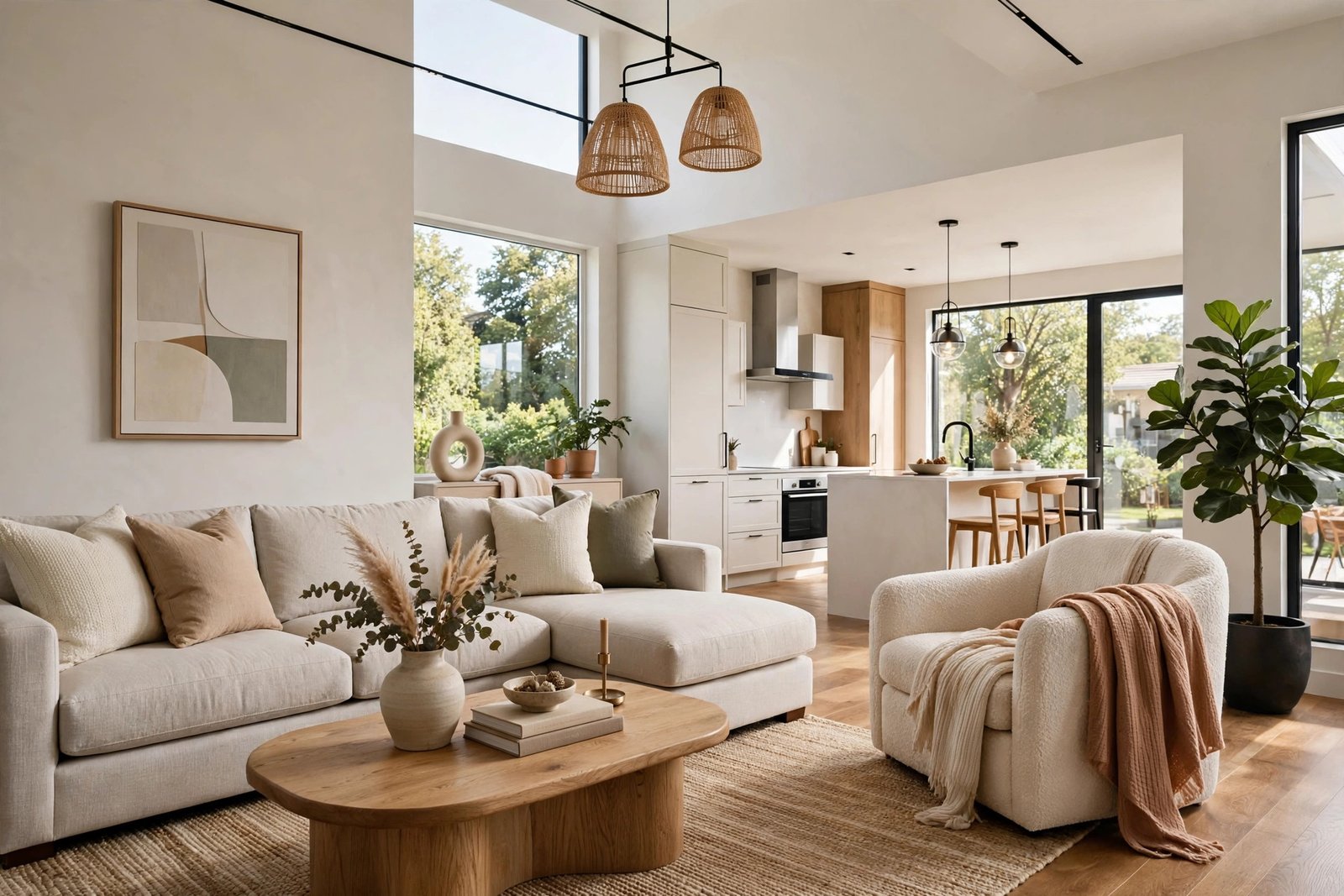
Buyers decide how they feel about your home within the first 30 seconds — and then spend the rest of the showing justifying that feeling. Staging is the art of engineering those 30 seconds: presenting your home so buyers see themselves living there, not you living there. In Chicago’s competitive market, staged homes consistently sell faster and for more — industry data suggests staged homes can fetch 5–15% more than unstaged ones. On a $400,000 home, that is $20,000–$60,000 for a few weekends of work and a modest budget.
This guide covers room-by-room staging strategy: the psychology, the priorities, the budget breakdown, and the Chicago-specific touches that make listings stand out.
The Psychology: What Staging Actually Does
Staging works on three psychological levers: depersonalization (buyers cannot picture their life in your home while staring at your family photos — neutral space invites projection), aspiration (buyers pay premiums for homes that feel like the life they want — the reading nook, the entertainer’s kitchen), and perceived space and light (decluttered, bright rooms feel larger — and perceived square footage drives offers). You are not decorating for yourself; you are merchandising a product. That mindset shift is the whole game.
Step 1: Declutter Ruthlessly (The Free Win)
Before spending a dollar, remove: personal photos and memorabilia, refrigerator art and magnets, excess furniture (every room should have a clear purpose and walking space — remove 30–50% of furniture if needed), countertop appliances beyond one or two, closet overflow (closets should look spacious — box up off-season clothes), kids’ toys (contained to one area), pet evidence (beds, bowls, odors — more below), and anything broken, stained, or dated beyond saving. Rent a storage unit for a month or two — the $200/month cost returns itself many times over. The goal: buyers should see the house, not your stuff.
Step 2: Deep Clean Like a Surgeon
Staged homes are clean in a way lived-in homes are not: grout scrubbed, windows washed inside and out (natural light is staging gold), baseboards wiped, carpets professionally cleaned, stainless steel polished, bathrooms regrouted or recaulked if needed, and — critically — odor elimination. Pet, smoke, and cooking odors kill deals silently; you are nose-blind to your own home, so ask a brutally honest friend. Professional deep cleaning ($300–$600 for a typical home) is among the highest-ROI staging investments.
Step 3: Paint and Light (The Big Visual Levers)
Paint: Repaint bold or dark rooms in warm neutrals — greige, soft white, light gray. Fresh neutral paint is the single highest-ROI cosmetic improvement in real estate; a $2,000–$4,000 whole-house repaint can return multiples. The right shade matters enormously — the best paint colors for selling quickly breaks down exactly which neutrals photograph and show best. Light: Maximize every lumen — open all blinds, replace dim bulbs with bright daylight LEDs (100W equivalent), add floor lamps to dark corners, update dated fixtures if budget allows. Bright homes photograph better, show better, and feel bigger — lighting is staging’s secret weapon. For budgeting the paint project, interior painting costs helps you plan realistically.
Room-by-Room Priorities
Living room: Define the focal point (fireplace, view, built-ins) — arrange furniture around it, not the TV. One statement piece, minimal clutter. Kitchen: Clear counters to near-empty (a bowl of fruit, a cookbook stand — that’s it). Update cabinet hardware if dated ($200 transforms a kitchen). Primary bedroom: Hotel vibes — crisp white bedding, symmetrical nightstands with lamps, no personal clutter. This room sells emotion. Bathrooms: Spa-like — new shower curtain, rolled white towels, minimal products, sparkling fixtures. Dining room: Set the table simply — placemats, a centerpiece — so buyers envision gatherings. Home office: Post-2020, this room matters enormously — stage a clean, appealing workspace, not a storage overflow. Basement/extras: Define every space — the ambiguous “bonus room” should read as gym, office, or lounge, not junk repository.
Curb Appeal: The 30 Seconds Before the 30 Seconds
Buyers form impressions from the street: mow and edge the lawn, mulch beds ($100 of mulch transforms a yard), power-wash the driveway and siding, paint or replace a worn front door (a black or navy door is the classic high-ROI choice), update house numbers and mailbox, add potted plants flanking the entrance, and ensure the entryway is bright and welcoming. In Chicago, mind the season — winter curb appeal means cleared walks, a wreath on the door, and warm light visible through windows.
Chicago-Specific Staging Notes
Embrace the seasons: Winter listings should feel warm and cozy (throw blankets, warm lighting, a fire in the fireplace for showings); summer listings should feel bright and airy. Highlight Chicago assets: City views, proximity to the lake, vintage details (exposed brick, original millwork) — stage to frame these, not hide them. Address the objections: Small Chicago kitchens and limited closet space are common — staging that maximizes perceived storage (organized closets, clever shelving) directly counters buyer hesitation. Parking: If you have it (garage, pad), make sure buyers see it — in parking-starved neighborhoods, it’s a major asset. Professional photography is non-negotiable — and the National Association of Realtors’ staging data at nar.realtor consistently confirms photography and staging’s impact on sale outcomes.
Budget: What to Spend
$0–$500 (DIY essentials): Declutter, deep clean, minor repairs, fresh caulk, new light bulbs — the fundamentals that cost sweat more than money. $500–$2,000: Add fresh paint in key rooms, new bedding and towels, updated hardware, curb-appeal basics. $2,000–$5,000: Whole-house paint, professional cleaning, furniture rental for vacant homes, landscaping refresh. $5,000+ (professional stager): For high-end or vacant homes — professional stagers ($2,000–$5,000+ for a typical project) pay for themselves on homes over $500,000. Rule of thumb: spend ~1% of the home’s value on staging for typical sales; the return averages multiples of the investment. Your agent can recommend stagers they trust — ask for before-and-after portfolios from comparable homes.
Conclusion
Staging your home to sell for top dollar comes down to: depersonalize ruthlessly, clean surgically, paint neutral, maximize light, define every room’s purpose, nail curb appeal, and photograph professionally. It is part psychology, part theater, and entirely worth it — a few thousand dollars and a few weekends for tens of thousands in sale price. Buyers do not buy houses; they buy the life they imagine inside them. Stage that life.
Authoritative source: See Realtor.com seller resources for expert guidance on this topic.
Frequently Asked Questions
Does staging really help sell a house?
Yes — industry data consistently shows staged homes sell faster and for 5–15% more than unstaged comparable homes. The effect is strongest in competitive markets and for vacant homes, where buyers struggle to envision the space.
How much does it cost to stage a house?
DIY staging runs $0–$2,000 (cleaning, paint, minor updates); professional staging runs $2,000–$5,000+ depending on home size and market. Budget ~1% of home value as a rule of thumb — the return typically multiples the investment.
Should I stage a vacant house?
Yes — vacant homes are the highest-ROI staging scenario. Empty rooms feel smaller and colder, and buyers can’t gauge scale. Even partial staging (key rooms) or virtual staging (for photos) dramatically outperforms truly vacant.
What rooms matter most for staging?
The living room, kitchen, primary bedroom, and bathrooms — in that order. These drive emotional decisions. Every other space just needs to be clean, defined, and clutter-free.