You’ve perfected the lipstick application. Then you catch your reflection at lunch and there’s a red halo bleeding into the fine lines around your mouth like a crime scene. Lipstick feathering — color migrating outside the lip line into surrounding skin — is the makeup problem that ages a look instantly and wastes good product. It’s caused by specific, fixable things: lip texture, formula choice, and missing prep steps. Here’s the complete prevention system.
Why Lipstick Bleeds: The Three Causes
Feathering happens when pigment travels along the skin’s micro-texture. Cause one: fine lines around the mouth (everyone gets them; they’re deeper in smokers, straw-users, and the chronically dehydrated) act as tiny channels wicking color outward. Cause two: creamy, emollient formulas — the comfortable hydrating lipsticks everyone loves — are literally designed to move, and they keep moving past the lip border. Cause three: unprepped lips. Lipstick applied over bare, unprimed skin has nothing anchoring it; the skin’s natural oils give it a slip-n-slide.
Chicago winters intensify all three: cold wind chaps lips (rougher texture, more channels), indoor heating dehydrates skin (deeper-looking lines), and everyone reaches for the creamiest formulas for comfort. Winter is peak feathering season, which is why the fix matters most from November through March.
Prep: The Foundation Nobody Skips Twice
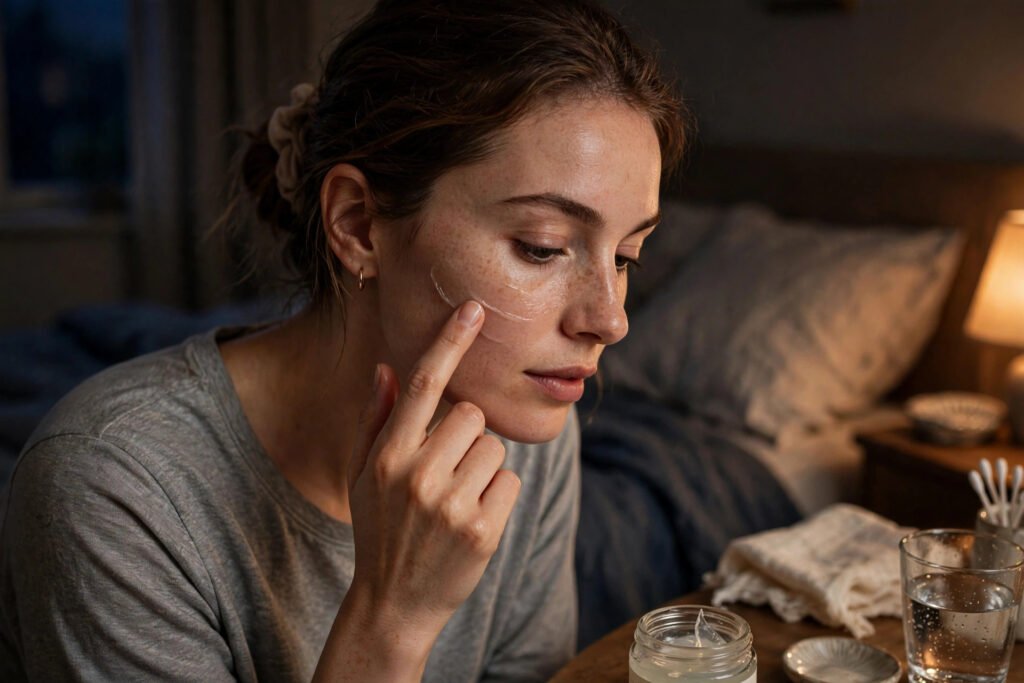
Exfoliate lips 2–3 times a week — a damp washcloth, a sugar scrub, or a chemical lip exfoliant. Smooth lips have fewer channels for color to travel. Follow with lip balm, but here’s the critical timing: apply balm 10 minutes before lipstick, then blot off the excess. Balm hydrates the lip tissue, but leftover balm on the surface creates the slip that causes bleeding. Hydrated underneath, matte on top — that’s the rule.
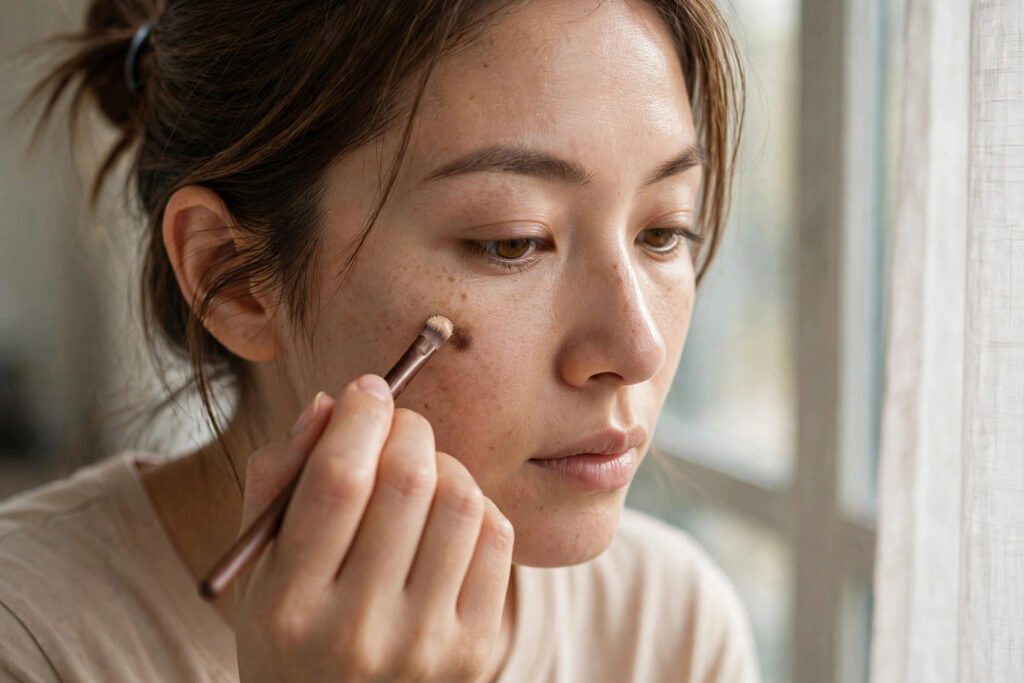
Then prime. A dedicated lip primer (or a dab of foundation/concealer pressed over the lips and slightly beyond the natural line) creates a grippy base and neutralizes your natural lip color so the lipstick shows true. This step alone prevents half of all feathering, and it takes twenty seconds. Choosing sunscreen for sensitive skin matters here too — the skin around the mouth is thin and reactive, so lip-area sun protection prevents the UV damage that deepens feathering channels over time.
The Liner Technique That Actually Seals
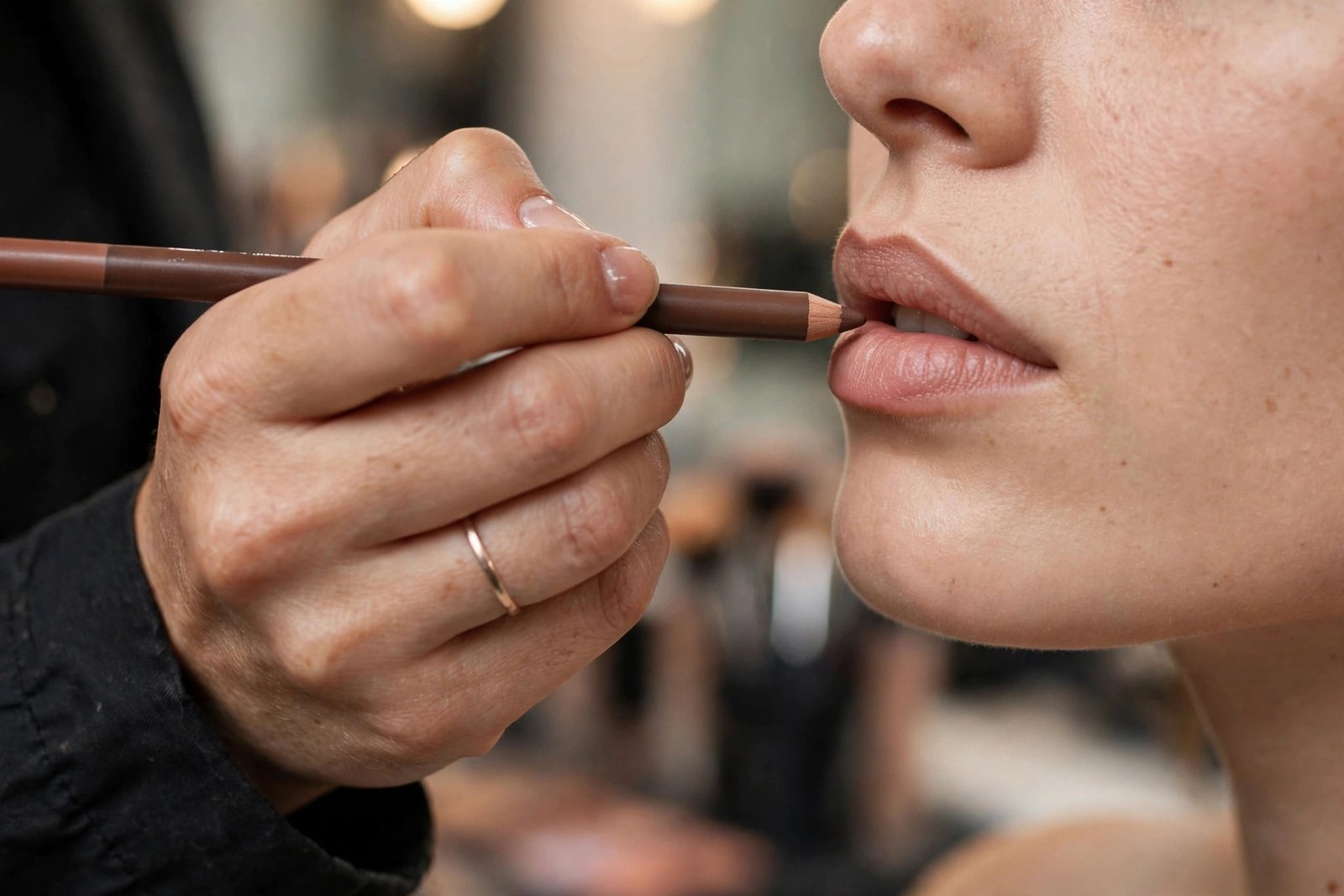
Lip liner isn’t just for definition — it’s the dam that holds the color in. But most people use it wrong. The professional method:
Line slightly outside trouble spots. Where feathering happens (usually the outer corners and cupid’s bow area), you can line a hair outside your natural border — undetectable if the liner matches the lipstick, and it gives the color room without crossing onto bare skin.
Fill the entire lip with liner. Don’t just outline — color in the whole lip. Liner formulas are drier and waxier than lipstick; a full liner base gives the lipstick something to grip and dramatically extends wear. This is the single biggest difference between lipstick that lasts through lunch and lipstick that migrates by 10 a.m.
Use invisible liner for bold colors. Clear wax-based “lip lock” liners create the dam without color-matching stress — ideal for reds and dark berries where a visible liner line would look harsh. Apply it around the outside of the lip line like an invisible fence.
Formula Choices: What Bleeds and What Doesn’t
Matte liquid lipsticks bleed least (they set and lock) but are least comfortable. Traditional creamy bullets bleed most. The sweet spot for most people: satin/matte bullet formulas, or layering — apply a creamy lipstick, blot firmly with tissue, dust the faintest whisper of translucent powder over the lips through the tissue, then apply a second thin layer. This “sandwich” method locks color while keeping comfort. It’s the backstage trick makeup artists have used for decades.
For Chicago winter specifically, avoid applying lipstick over unblotted balm (the number-one winter feathering cause), and consider lip stains as your base under bullet lipstick — the stain provides color that can’t migrate, so even if the bullet fades, you’re never bare.
Hydration from within helps more than people credit: chronically dehydrated lips feather worse. How your morning coffee affects your skin is worth knowing — caffeine’s mild diuretic effect plus lip-licking habits quietly worsen the dryness that drives feathering.
Long-Wear Strategy for Weddings and Events
For occasions where your lipstick must survive eight hours of talking, eating, and photography, layer like a makeup artist. Start with lip stain as the base (it physically tints the lip tissue and cannot migrate), add the liner-fill layer, apply bullet lipstick, blot, then set with the tissue-and-powder sandwich. Carry the bullet for one mid-event touch-up — applied over the locked base, it refreshes in seconds. Avoid glossy topcoats for events; gloss reactivates everything underneath and restarts the migration clock. The American Academy of Dermatology’s lip care guidance also notes that SPF lip products under your color prevent the sun damage that worsens feathering over time — relevant for outdoor summer weddings.
Dark and bold shades need extra insurance because feathering shows more dramatically against skin. For reds, berries, and deep plums, the invisible wax liner is mandatory rather than optional, and lining a hair outside your natural border in the corners prevents the downward bleed that makes bold lips look messy by evening. Mayo Clinic’s skin care resources cover the lip-area sun protection that keeps the surrounding skin smooth and less prone to feathering channels.
Emergency Fixes (When It’s Already Bleeding)
Caught mid-day with feathering: don’t wipe — wiping drags color further. Press a tissue firmly to lift, then clean the halo precisely with a flat concealer brush and a touch of concealer, “cutting” a crisp line back around the lips. A pointed cotton swab with micellar water works for small smudges. Then re-seal with invisible liner. The whole rescue takes ninety seconds in a bathroom mirror.
Conclusion
Lipstick bleeding is a prep and formula problem, not a lipstick quality problem. Exfoliate and prime (blotted balm, then primer or foundation), fill the whole lip with liner as a gripping base, use invisible liner as a dam for bold shades, and choose satin over ultra-creamy formulas in feathering-prone months. Chicago winter will test the system — dry air, chapped lips, creamy comfort formulas — but the liner-fill plus sandwich method holds through all of it. Your lipstick should stay where you put it. Now it will.
Frequently Asked Questions
How do I stop lipstick from feathering into fine lines?
Exfoliate lips regularly, prime with blotted balm plus primer, fill the entire lip with liner (not just the outline), and use a clear wax liner as an invisible dam around the lip line. Matte and satin formulas feather far less than creamy ones.
Does lip liner really prevent bleeding?
Yes — it’s the most effective single step. Liner formulas are waxier and drier than lipstick, creating a physical barrier. Filling the whole lip (not just outlining) gives lipstick a grippy base that dramatically reduces migration.
Why does my lipstick bleed more in winter?
Cold wind chaps lips (creating more texture channels), indoor heating dehydrates skin (deepening fine lines), and creamy winter lipstick formulas migrate more. Exfoliate more often in winter, blot balm before applying, and favor satin formulas.
What’s the best lipstick formula to prevent feathering?
Matte liquid lipsticks bleed least but can be drying; satin-finish bullets are the best comfort-to-staying-power balance. The sandwich method (lipstick, blot, translucent powder through tissue, second layer) locks any formula significantly better.