You’re about to spend $400,000 on a Chicago home, and someone suggests you also spend $500 to have a stranger crawl through its attic and poke at its foundation. It sounds optional until you understand what a home inspection actually covers — and the five-figure disasters it routinely catches. In a city where most homes predate World War II, the inspection isn’t a formality; it’s the highest-ROI $500 in the entire transaction. Here’s what inspectors examine, what they don’t, and how to get maximum value from yours.
What a Standard Home Inspection Covers
A licensed Illinois home inspector evaluates the property’s major systems and components through visual, non-invasive examination. The Illinois standard of practice covers:
Structure and Foundation
The inspector examines the foundation walls, floors, and visible framing for cracks, settlement, water intrusion, and structural concerns. In Chicago, this means scrutinizing century-old stone and brick foundations for bowing, stair-step cracking, and efflorescence. They’ll note sloping floors and sticking doors as potential settlement indicators — common and often benign in old homes, but documented for your awareness.
Roof and Exterior
Roof covering condition, flashing, chimneys, gutters, and downspouts. The inspector estimates remaining roof life — critical in Chicago, where replacement runs $10,000–$18,000. They’ll also check siding or masonry: crumbling mortar, spalling brick, and failed tuckpointing are Chicago staples. Exterior grading gets attention too — soil should slope away from the foundation, a detail that prevents the basement water problems plaguing the city’s clay soil.
Electrical System
Panel type and amperage, visible wiring, outlets, switches, and GFCI protection. Chicago inspectors specifically hunt for knob-and-tube wiring, 60-amp fuse boxes, double-tapped breakers, and ungrounded outlets — all common in pre-war homes and all expensive to remediate ($8,000–$15,000 for full rewiring). They’ll test a representative sample of outlets and note any safety hazards requiring immediate attention.
Plumbing
Visible supply and drain lines, water heater age and condition, fixture operation, water pressure, and drainage. Inspectors flag galvanized steel pipes (corrosion-prone, near end of life in old Chicago homes), polybutylene (failure-prone), and active leaks. They run faucets, flush toilets, and check under sinks — simple tests that reveal thousands in deferred maintenance.
HVAC Systems
Furnace/boiler and air conditioning age, condition, and operation. The inspector fires up the heat (in season), checks for cracked heat exchangers (carbon monoxide risk), examines flue venting, and notes the system’s age against typical lifespans: furnaces 15–20 years, AC 12–15 years, boilers 20–30 years. A 25-year-old furnace isn’t just inefficient — it’s living on borrowed time at $4,500–$8,000 replacement cost.
Interior, Insulation, and Ventilation
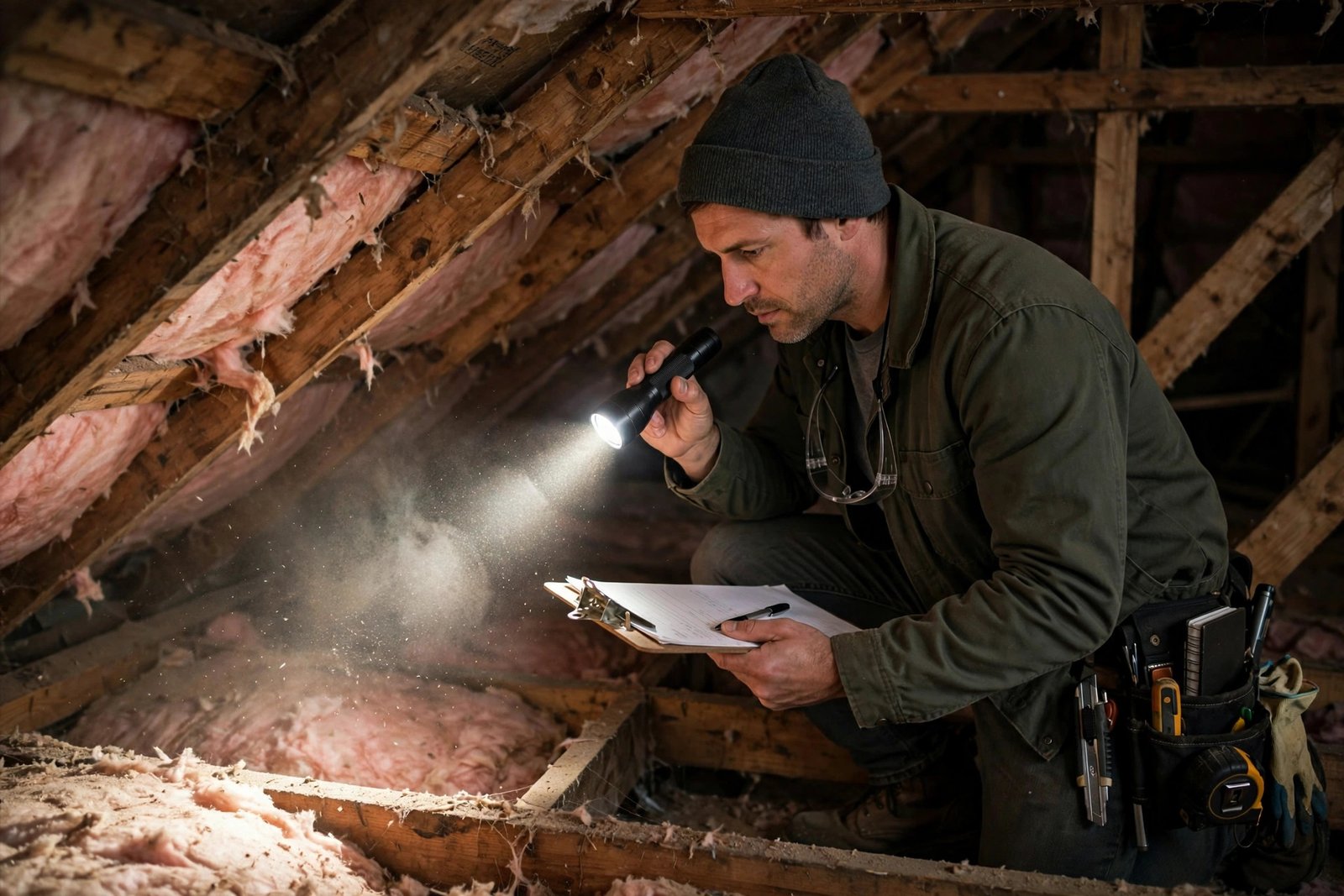
Walls, ceilings, floors, windows, doors, and stairs. Attic inspection covers insulation depth (Chicago attics often under-insulated, driving winter heating bills), ventilation, and signs of roof leaks or pests. Basement and crawlspace examination targets water intrusion, sump pumps, and foundation issues — the inspector’s nose works as hard as their flashlight down there.
Appliances and Fireplaces
Built-in appliances get basic operational tests. Fireplaces and chimneys receive visual examination (a dedicated chimney inspection is recommended for wood-burning units). Garage doors, including auto-reverse safety features, are tested.
What Inspections Don’t Cover (Important Limits)
Standard inspections are visual and non-invasive — inspectors don’t open walls, move furniture, or test buried systems. Specifically excluded or limited:
- Sewer lines: The underground lateral to the street isn’t inspected — yet Chicago’s clay pipes fail constantly ($5,000–$12,000 replacement). Always order a separate sewer scope ($150–$300).
- Inside walls: Mold, wiring, and plumbing hidden behind drywall stay hidden.
- Environmental hazards: Radon, lead paint, and asbestos require specialized testing.
- Pools, septic, wells: Rare in Chicago proper, but excluded where present.
- Code compliance: Inspectors identify safety concerns but don’t certify code compliance.
Recommended Add-On Inspections for Chicago
- Sewer scope ($150–$300): Non-negotiable in Chicago. The single highest-value add-on.
- Radon test ($150–$250): Illinois sits in EPA zones with elevated radon potential; mitigation costs $1,200–$2,500.
- Chimney inspection ($200–$400): For any home with a masonry chimney or fireplace.
- Mold/air quality ($300–$600): If the inspector notes moisture, musty odors, or suspicious staining.
Budget $800–$1,200 total for inspection plus key add-ons — trivial against a $400,000 purchase. For context on the repair costs these inspections help you negotiate, window replacement costs show how “minor” findings compound quickly.
How to Choose an Inspector
Illinois licenses home inspectors — verify the license and check for complaints. Look for 500+ inspections of experience, specific familiarity with Chicago’s vintage housing stock (an inspector who mostly does new suburban construction will miss old-city issues), and sample reports that are detailed with photos, not checkbox forms. Ask your agent for recommendations, then independently verify. Attend the inspection in person — the two to three hours teach you more about your future home than any document, and you can ask questions in real time. Understanding how agents operate in this market helps you evaluate whether their inspector recommendation serves you or the deal.
Using the Report: Negotiate, Don’t Panic
Every inspection finds issues — even new construction. Categorize findings into safety hazards (negotiate hard), major defects (get contractor bids, request credits), and maintenance items (your future to-do list). Request credits over seller repairs where possible; you control quality post-closing. And remember the report’s secondary value: it’s a five-year maintenance roadmap for your new home, prioritized by a professional.
Illinois Inspector Licensing: What It Guarantees (and Doesn’t)
Illinois licenses home inspectors through the Department of Financial and Professional Regulation — a meaningful consumer protection many buyers underuse. Licensed inspectors must meet education requirements, carry insurance, and follow a defined standard of practice; you can verify any inspector’s license and disciplinary history through the IDFPR license lookup. But licensing sets a floor, not a ceiling: it doesn’t guarantee familiarity with Chicago’s vintage housing stock, thoroughness, or communication quality. That’s why sample reports and references matter as much as the license. The InterNACHI standards of practice define exactly what inspectors must examine — reading them takes 20 minutes and permanently upgrades your ability to evaluate both inspectors and their reports. Licensed, experienced with pre-war Chicago homes, and willing to let you attend: that’s your hiring checklist.
Conclusion
A Chicago home inspection covers structure, roof, electrical, plumbing, HVAC, interiors, and major systems — everything visible without opening walls — for $400–$600. Its blind spots (sewer lines, radon, in-wall conditions) are covered by targeted add-ons totaling a few hundred more. Choose a licensed inspector experienced with vintage Chicago housing, attend in person, and use the findings to negotiate credits with contractor-backed numbers. The inspection is the only part of the transaction solely dedicated to protecting you. Use it like it matters — because on a century-old Chicago home, it matters enormously.
Frequently Asked Questions
How long does a home inspection take in Chicago?
Typically 2–4 hours for a single-family home, depending on size, age, and condition. Older, larger homes take longer. Be present for at least the final walkthrough if you can’t attend the whole thing.
Are home inspectors licensed in Illinois?
Yes. Illinois requires home inspector licensing through the Department of Financial and Professional Regulation. Always verify the license and check for disciplinary history before hiring.
Should I get a sewer scope in Chicago?
Yes — it’s the single most valuable add-on. Chicago’s clay sewer laterals fail regularly, and replacement costs $5,000–$12,000. A $150–$300 camera scope reveals collapses, root intrusion, and bellies before you own the problem.
Can a home inspection fail?
Inspections don’t pass or fail — they document conditions. The report gives you information to renegotiate, request repairs, or walk away under your inspection contingency. Even alarming reports are useful: they quantify exactly what you’re buying.
What if the seller won’t allow an inspection?
Consider it a major red flag. In rare competitive situations, consider a pre-offer inspection instead. Never buy a vintage Chicago home with zero professional evaluation — the risk is asymmetric and entirely yours.