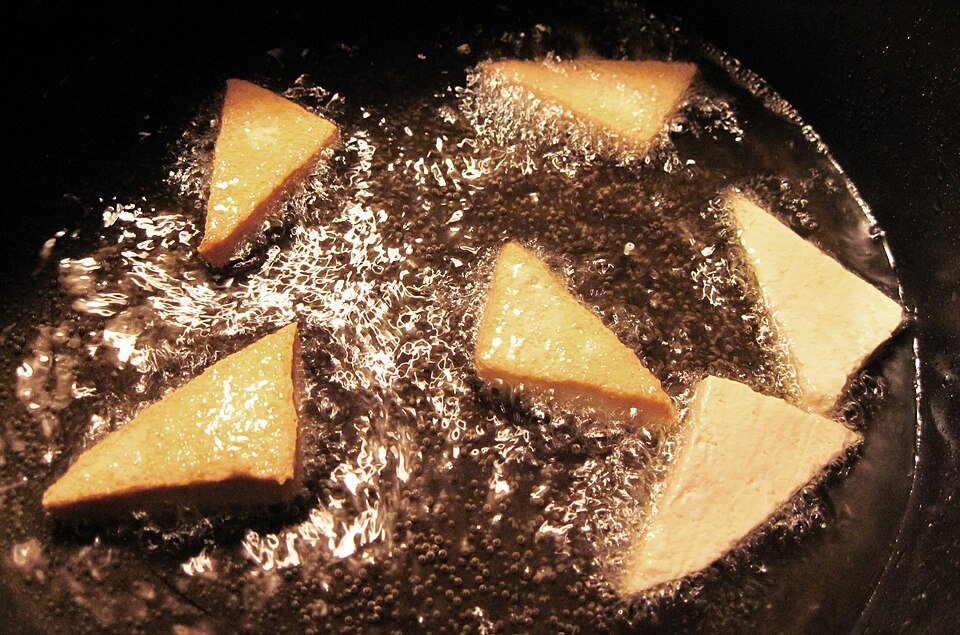
Deep frying will never be health food, but the oil you choose genuinely matters. The question what is the healthiest oil for deep frying at home isn’t about finding a virtuous fry; it’s about stability at high heat, because degraded oil creates harmful compounds regardless of the oil’s reputation.
I’ve dug into the food science here. Here’s what matters and which oils win.
What actually matters: stability, not marketing
The key factor is oxidative stability at frying temperatures (350-375degF/175-190degC): oils high in saturated and monounsaturated fats resist breakdown better than polyunsaturated-heavy oils. This is why the smoke point alone is misleading; some high-smoke-point oils still oxidize badly.
Refined oils generally fry better than unrefined (fewer impurities to burn), regardless of the oil’s health halo. And reusing oil matters: each fry cycle degrades oil further; strain and reuse 2-3 times max, discarding when it darkens, smokes early, or smells off. Fresh oil for each big fry session is ideal.
What is the healthiest oil for deep frying at home: the winners
Refined peanut oil: the fryer’s classic, high smoke point, neutral flavor, good stability, and affordable in bulk. Allergies aside, it’s the practical champion. Refined avocado oil: excellent stability and very high smoke point, but expensive for the volumes frying requires.
Tallow and lard: traditional, extremely stable due to saturated fats, and they make phenomenally crispy food; the health debate around them has evolved considerably. Refined coconut oil: stable but adds flavor and costs more. High-oleic sunflower/safflower oils: bred for stability, neutral, and affordable; the modern food-industry workhorse.
Oils to avoid for deep frying
Extra-virgin olive oil: wonderful for dressings, wasteful and smoky for deep frying; its low smoke point and strong flavor fight the fryer. Regular vegetable/soybean oil: high in polyunsaturates, oxidizes significantly with repeated heating. Flaxseed oil: never heat it, period.
Unrefined anything: impurities burn and create off-flavors at frying temps. Save the artisanal oils for finishing, where their flavors actually shine and their compounds stay intact. The fryer is no place for delicate oils.
Frying healthier regardless of oil
Temperature control is health control: maintain 350-375degF; too cool and food absorbs excess oil, too hot and oil breaks down faster. A $15 fry thermometer is essential. Don’t overcrowd (temperature crashes), drain on a wire rack (not paper towels, which trap steam and sog the crust), and season immediately.
Fry in smaller batches, keep oil clean between batches (skim particles; burnt bits degrade oil), and consider the air fryer for everyday crispiness, reserving deep frying for occasions. The healthiest deep frying is occasional deep frying with stable oil at correct temperatures. The Harvard T.H. Chan School of Public Health nutrition resources have solid overviews of dietary fats for the curious.
Smart frying oil
- Refined peanut oil: The practical champion. Stable, neutral, affordable in bulk.
- High-oleic sunflower: Modern stable workhorse. Neutral and affordable.
- Tallow/lard: Extremely stable traditional options. Phenomenal crispness.
- 350-375degF always: Thermometer essential. Cool oil absorbs; hot oil degrades.
- Strain and limit reuse: 2-3 uses max. Discard when dark, smoky, or off-smelling.
- Wire rack draining: Not paper towels. Racks keep crusts crisp, not steamy.
Frying oil mistakes
- EVOO in the fryer: Wasteful, smoky, wrong tool. Save it for finishing.
- No thermometer: Guessing temperatures guarantees greasy or degraded results.
- Overcrowding: Crashes oil temperature. Small batches fry better and healthier.
- Endless reuse: Degraded oil creates harmful compounds. Fresh oil matters.
- Paper towel draining: Traps steam, sogs crust. Wire racks preserve crispness.
The reuse question: how many times can oil be reused
Strained and stored properly (cool, dark, sealed), frying oil handles 2-3 uses for similar foods. Each cycle accumulates breakdown products and food particles that lower the smoke point and degrade flavor. Fish-fried oil flavors everything after it; keep separate oil for delicate foods.
Discard when it darkens significantly, smokes below normal temperatures, smells off, or foams excessively. These are the oil telling you it’s done. Fresh oil for important frying; reused oil for everyday batches. It’s a judgment call guided by senses.
Healthiest frying oil: your questions answered
What is the healthiest oil for deep frying?
The most stable at high heat: refined peanut oil, high-oleic sunflower/safflower, or tallow. Stability (resistance to oxidation) matters more than the oil’s raw health reputation. Stable oil used at correct temperatures is the healthiest frying.
Is it bad to reuse frying oil?
Up to 2-3 times with straining, no; beyond that, degradation creates harmful compounds. Discard dark, smoky, or off-smelling oil. Reuse is economical and safe within limits; endless reuse is not.
Does the smoke point really matter?
Somewhat, but oxidative stability matters more. Some high-smoke-point oils still oxidize badly with repeated heating. Look for stability data, not just smoke point marketing. Refined, stable oils win for frying.
Is air frying healthier than deep frying?
Generally yes: dramatically less oil absorbed, fewer calories, no degraded-oil concerns. Air frying nails 80% of the crispiness for everyday cravings. Reserve deep frying for occasions when only the real thing will do.
Can I mix different frying oils?
Yes, if both are stable at frying temperatures (e.g., peanut plus high-oleic sunflower). Don’t mix stable with unstable oils; the blend is only as good as its weakest component. Keep it simple: one good oil beats a complicated blend.
How do I dispose of used frying oil?
Cool it, pour into a sealed container, and trash it (never down drains; it causes blockages). Many municipalities have cooking-oil recycling drop-offs. Small amounts can be composted in some systems. Never pour hot oil anywhere carelessly.
The bottom line
Refined peanut oil or high-oleic sunflower for practical everyday frying; tallow for traditionalists. Stability at heat matters more than health halos or smoke points alone. Fry at 350-375degF with a thermometer, don’t overcrowd, limit reuse, and drain on racks. Good oil plus good technique is the healthiest frying possible. Related reading: how to make crispy french fries in an air fryer and how to season a cast iron skillet for the first time.