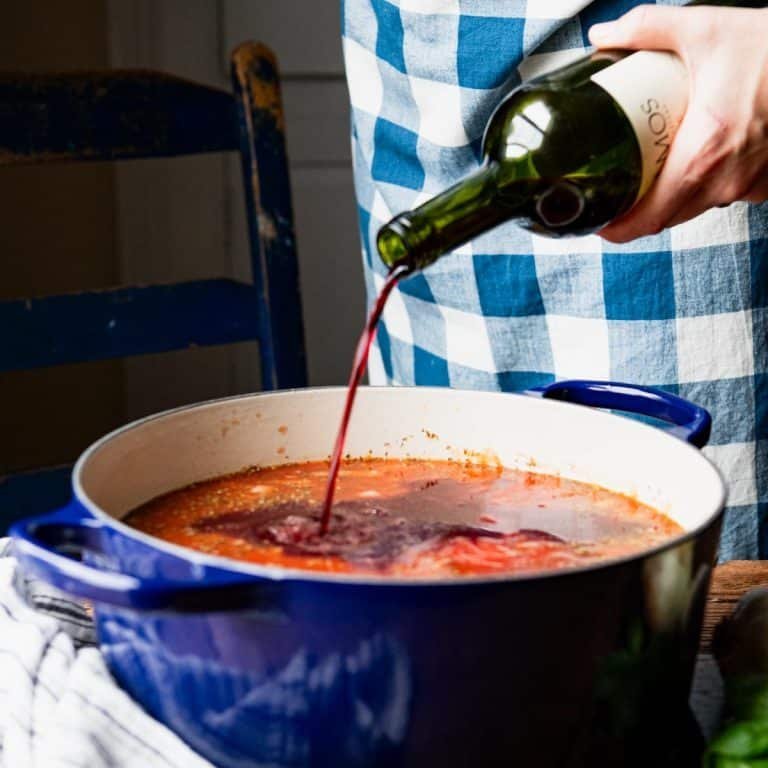
Here’s the rule every Italian grandmother will tell you: don’t cook with a wine you wouldn’t drink. That doesn’t mean you need a $25 bottle — it means the best cheap wine to cook with for pasta sauces is a simple, drinkable $6-to-$10 bottle, not the salty ‘cooking wine’ from the grocery aisle.
I’ve tested this side by side more times than I can count, and the difference between real wine and cooking wine in a sauce is night and day. Here’s what to buy, what to skip, and how to use it so your pasta sauce tastes like a trattoria’s.
The Golden Rule of Cooking Wine for Pasta Sauce
If it’s unpleasant in the glass, it won’t magically become pleasant in the pan. Heat concentrates flavors — including the bad ones. That bottle labeled ‘cooking wine’ on the supermarket shelf is loaded with salt and preservatives, and it will make your sauce taste harsh and one-dimensional. A cheap but real wine, on the other hand, adds acidity, fruit, and depth that water or broth can’t replicate.
My actual spending rule: $6 to $12 bottles. Below that you’re gambling; above that you’re wasting money because the subtle qualities of a fine wine cook off within minutes. The alcohol mostly evaporates, but the flavor compounds stay — so you want clean, simple flavors, not complexity. Bon Appétit’s editors have tested this exact question extensively and landed in the same place: drinkable and cheap beats fancy every time.
Best Cheap Red Wines for Pasta Sauce
For tomato-based sauces — marinara, Bolognese, puttanesca — you want a dry, medium-bodied red with moderate tannins. Chianti is the classic Italian choice and you can find perfectly good bottles for $8 to $10. Merlot is my weeknight pick: soft, fruity, and almost impossible to mess up. A cheap Côtes du Rhône or a basic Sangiovese works beautifully too.
What to avoid: big oaky Cabernet Sauvignons and jammy Zinfandels. Heavy oak turns bitter when reduced, and very fruity wines can make the sauce taste oddly sweet. Also skip anything labeled ‘red blend’ that tastes like candy. You want dry and savory. Pour about half to three-quarters of a cup into the sauce after browning your meat or softening your aromatics, let it bubble for 2 to 3 minutes to cook off the raw alcohol taste, then add your tomatoes.
- Chianti — the classic, $8-10, perfect for marinara and Bolognese
- Merlot — soft and forgiving, great all-rounder
- Côtes du Rhône — dry, savory, excellent in meat sauces
- Sangiovese — bright acidity that loves tomatoes
Best Cheap White Wines for Pasta Sauce
For white sauces, seafood pastas, and anything with cream or lemon, go white — and go dry. Pinot Grigio is the workhorse: crisp, neutral, cheap (good ones at $7 to $9), and it disappears into the sauce leaving just brightness. Sauvignon Blanc adds a little more character with its herbal edge, which is lovely in a white clam sauce or a lemon-butter pasta.
Never cook with sweet wines like Moscato or most Rieslings unless the recipe specifically calls for sweetness — they’ll throw the whole sauce off balance. And the same rule applies: no ‘cooking wine.’ A $7 Pinot Grigio you enjoy with dinner is infinitely better than a $5 bottle of salted cooking wine. Use about half a cup, added after the aromatics soften, and let it reduce by about half before adding cream or broth.
Storing Leftover Cooking Wine
You’ll rarely use a whole bottle in one sauce, so don’t waste the rest. Recork it and it’ll keep in the fridge for 3 to 5 days — reds too, once opened they belong in the fridge. Better yet, freeze leftover wine in ice cube trays. Each cube is about 2 tablespoons, and frozen wine cubes go straight from freezer to pan whenever a sauce needs deglazing.
Those cubes are also perfect for risotto, pan sauces for crispy-skinned salmon, or a quick marinade base — which pairs nicely with the techniques in my chicken marinade guide. One $8 bottle can stretch across four or five meals if you freeze what you don’t pour.
How Much Cheap Wine to Cook With (and When to Add It)
Knowing what is the best cheap wine to cook with is only half the battle — the other half is technique. Add the wine after your aromatics have softened but before your main liquid (tomatoes, broth, cream). Pour in about half to three-quarters of a cup for a sauce serving four, then let it bubble for 2-3 minutes. That simmering time cooks off the harsh raw-alcohol edge while leaving the fruity, acidic backbone that makes the sauce sing.
A common mistake is adding wine at the very end — it tastes boozy and sharp because the alcohol never cooks out. Another is using too much: wine should accent the sauce, not dominate it. If you accidentally over-pour, just simmer longer to reduce it down. And here’s a rule of thumb for pairing: cook with the same category you’d drink with the meal. Making a tomato sauce you’ll serve with Chianti? Cook with Chianti. The flavors harmonize because they were built for each other — it’s the same logic sommeliers use, applied to the pan instead of the glass.
Red vs White: Which Cheap Wine to Cook With for Each Sauce
The quick decision tree for which cheap wine to cook with: tomato-based or beefy sauce → dry red (Chianti, Merlot, Côtes du Rhône). Cream, butter, lemon, or seafood sauce → dry white (Pinot Grigio, Sauvignon Blanc, unoaked Chardonnay). Mushroom sauce → either, but red adds depth. The wine should echo what you’d drink alongside — if the meal wants red wine in the glass, it wants red wine in the pan.
Two exceptions worth knowing: never use red wine in a cream sauce unless you want a pink sauce (the color bleeds), and never use an oaky Chardonnay anywhere — the oak turns bitter when reduced. When in doubt, the $7 Pinot Grigio is the most versatile bottle in the kitchen: it works in nearly every white-wine application and won’t ruin a red sauce in a pinch. Keep one red and one white on hand (plus the frozen cubes from leftovers) and you’re equipped for every pasta night.
The Bottom Line
Buy a dry, drinkable $6-to-$12 bottle — Chianti or Merlot for red sauces, Pinot Grigio or Sauvignon Blanc for white — and never touch grocery-store ‘cooking wine.’ That’s the best cheap wine to cook with for pasta sauces, and your sauces will taste like it.